Short answer
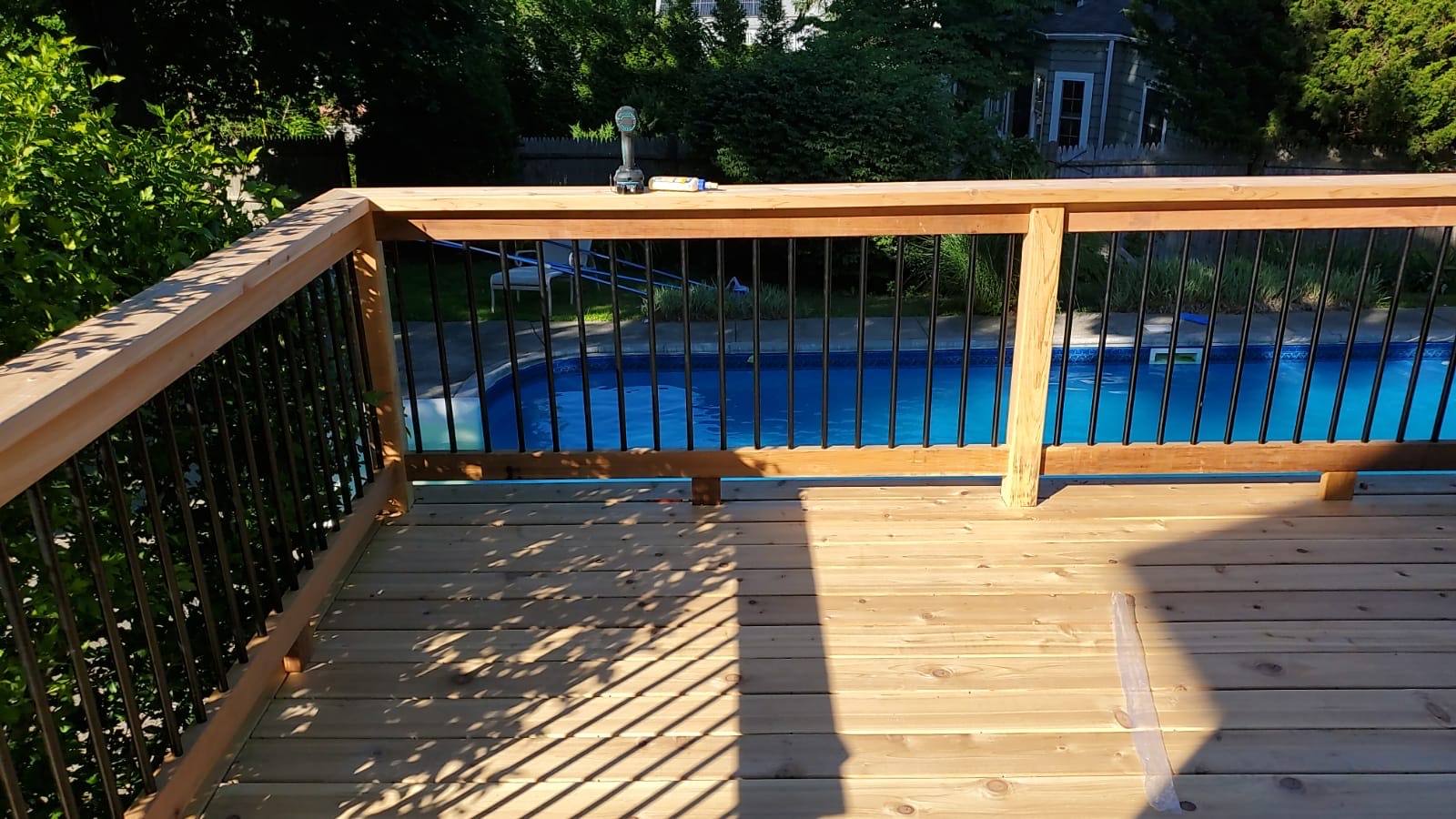
A good New Hampshire pool deck sits on footings below the frost line, uses a light-colored capped composite or PVC board that stays cooler and grips when wet, and treats the deck edge as part of the pool barrier: guard height, baluster spacing and a self-closing, self-latching gate. Your town's building inspector signs off on the barrier, so plan it in from the first drawing.
A pool deck in New Hampshire works hard for three months and sits under snow for four. It has to be comfortable barefoot in July, safe when it is wet, and strong enough to carry a winter of snow with the pool closed. These are the decisions to make before anyone digs a footing.
Three Kinds of Pool Deck
Above-ground pool decks
The most common pool deck we see in New Hampshire. The deck is built level with the pool's top rail so you step straight in. It can wrap part of the pool or all of it, and usually includes a gated stair. The deck must stand on its own footings; it should never lean on or attach to the pool wall.
Raised decks beside an in-ground pool
Many in-ground pools are surrounded by concrete or pavers, with a raised deck off the house that looks over the pool. The deck becomes the shaded sitting and dining area, and the stairs land on the pool patio.
Spa and hot tub platforms
A filled hot tub is very heavy, far beyond what a normal deck is designed for. A deck that carries a spa needs framing and footings sized for that load, or the tub should sit on its own pad with the deck built around it.
Decking That Works Around Water
- Heat. Dark boards get hot in full sun. Lighter capped composite or PVC colors are much kinder to bare feet.
- Grip. Choose a textured board, and keep stair treads and the pool entry free of algae with regular cleaning.
- Water. Capped composite and PVC do not rot from splash-out. Pressure-treated wood works but needs regular sealing near a pool.
- Hardware. Stainless steel fasteners and hardware are worth it near saltwater pools.
Our composite decking page covers board options in more detail.
The Barrier: Railings, Gates and Ladders
Building codes treat the barrier around a residential pool as a safety system for young children, and a pool deck is usually part of it. Expect your inspector to check:
- Guard height and the gaps between balusters
- That nothing on the outside of the barrier makes it easy to climb
- A self-closing, self-latching gate at the top or bottom of the deck stair, with the latch out of a small child's reach
- How the deck, fence and house walls connect so there is no way around
New Hampshire's building code is enforced by each town, and details can differ. We confirm the barrier design with your building department before we order materials. Our railings and stairs work covers the gate and guard options.
Built for New Hampshire Winters
- Footings below the frost line. Typically four feet or more in southern New Hampshire and deeper further north. Frost heave is what twists pool decks out of level with the pool rail.
- Snow load. Joists and beams sized for your town's snow load, not just people standing on the deck.
- Room for the cover. Leave access to fasten and remove the winter cover, and to reach the pump and filter.
- Drainage. Keep gaps clear so meltwater does not freeze on the surface.
Permits and Shoreland Rules
A pool deck almost always needs a building permit from your town. If the property is near a lake, pond or river, New Hampshire's shoreland protection rules may also apply to new structures close to the water. We prepare the drawings and handle the permit as part of the project.
Planning a Pool Deck?
We build pool decks across New Hampshire and the Seacoast, as well as in Massachusetts, Rhode Island and Southern Maine. Send us a few photos of your yard and pool and request a free estimate, or call (781) 528-0069.
Frequently Asked Questions
Do I need a permit for a deck around an above-ground pool in New Hampshire?
Almost always. A raised pool deck is a structure with stairs and guards, and the pool barrier rules apply to it. New Hampshire enforces its building code through each town, so the permit and inspections come from your local building department. We draw the deck and pull the permit as part of the job.
What decking stays coolest around a pool?
Lighter colors in capped composite or PVC stay noticeably cooler than dark boards in July sun. PVC boards usually run a little cooler than composite of the same color. Ask to stand on a sample that has been sitting in the sun before you choose.
Can the deck be part of the pool fence?
Yes, and it often should be. The deck guard, stair gate and any fence that ties into the house become the barrier that keeps young children out of the pool when no one is watching. Height, gaps and gate hardware have to meet the code your town enforces, so we confirm the details with the inspector before we order materials.
Will chlorine or salt water damage composite decking?
Capped composite and PVC handle splash-out well. Rinse the deck with the hose a few times a season, and use stainless steel fasteners and hardware near a saltwater pool. Bare pressure-treated wood and plain steel fasteners take the most abuse from pool water.
When should we build a pool deck in New Hampshire?
Design and permit over the winter, then build in spring before the pool opens or right after it closes in the fall. Footings cannot be poured in frozen ground, so a fall build needs to start early enough to get concrete in before the ground freezes.
