Short answer
On the Maine coast, choose a capped composite or PVC board in a lighter color, fasten it with stainless steel screws or the manufacturer's hidden clips, and spend the real money on the frame: frost-depth footings, coated or stainless connectors, and a properly flashed ledger. Close to the water, PVC is the safest board choice.
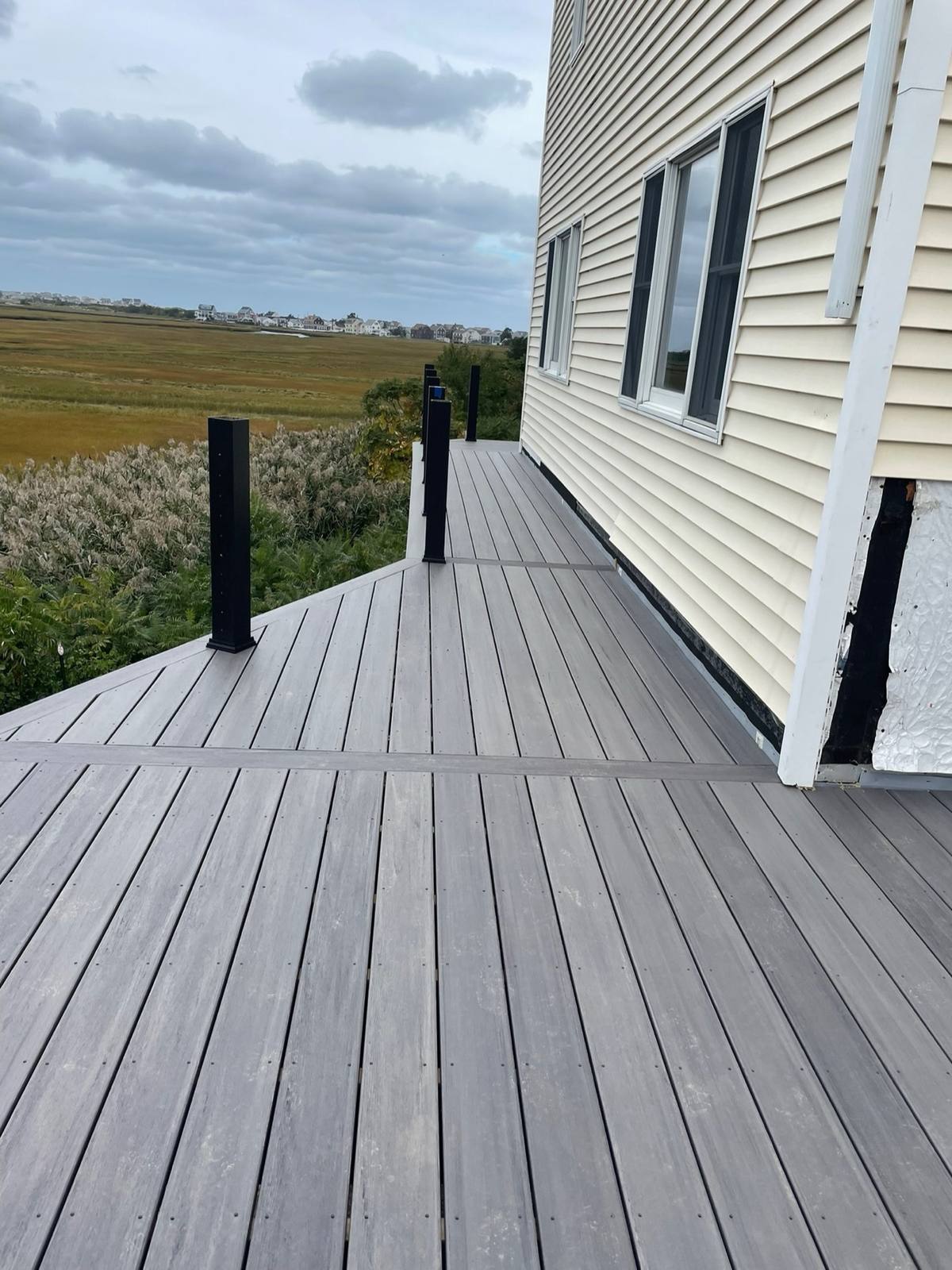
A deck in Kennebunkport, Cape Elizabeth or York takes salt spray in the summer, a few feet of snow in the winter and freeze-thaw cycles in between. Composite and PVC decking handle that far better than wood, but only if the parts you can't see are built for the coast too. Here is how we approach a composite deck in Southern Maine.
Choosing the Board: Capped Composite or PVC
Capped composite boards (TimberTech and Trex are the names most people know) have a wood-and-plastic core wrapped in a tough polymer shell. They do not rot, they never need stain, and the cap resists fading and staining. For most Maine homes, including many with a water view, they are the right board.
PVC boards, with Azek the best-known, contain no wood at all. On a deck that takes direct spray off the water, sits low over damp ground or stays shaded and wet, PVC is the safer choice. It is lighter, tends to run a little cooler underfoot, and costs more than most composite lines.
Two tips that matter more in Maine than elsewhere: pick a lighter color if the deck gets full sun, and choose a board with a textured, grippy surface for stairs and landings that will see ice.
Fasteners and Connectors Fail First
On the coast, good boards outlast poor hardware. We use stainless steel screws or the board manufacturer's hidden clip system, and coated or stainless joist hangers, post bases and ledger bolts. Standard galvanized hardware can rust through years early within reach of salt air, and a rusted hanger is a structural problem hidden under a deck that still looks fine.
The Frame Under the Boards
Composite decking sits on a pressure-treated frame in most cases, so the frame decides how long the deck lasts. On every build we:
- Set footings below the frost line, which in Southern Maine is typically around four feet. Your town's code enforcement officer confirms the depth for your address.
- Size joists and beams for the snow load your town requires. Coastal Maine snow is often wet and heavy.
- Bolt the ledger to the house with proper flashing, or build the deck freestanding when the house wall is not a good place to attach.
- Space joists for the board and pattern. Composite usually needs closer spacing than wood, and diagonal or herringbone layouts need closer still.
- Protect the tops of joists with butyl joist tape so water does not sit in the screw holes.
Installing in Cold Weather
Composite and PVC boards grow and shrink with temperature. A board cut and fastened on a cold April morning will be longer by August. Every manufacturer publishes gapping rules by temperature, and we follow them on the day of install. Skipping this is how you get buckled boards or open butt joints.
Shoreland Zoning and Permits
Most Maine towns require a building permit for a new deck. If the property is near the ocean, a river, a wetland or a great pond, Maine's shoreland zoning rules can also apply. They control setbacks from the water and can limit how much a structure is expanded. Talk to your town's code enforcement officer early, before the design is fixed. We prepare the drawings and handle the application.
Upkeep Over the Years
- Wash the deck with a deck cleaner and soft brush once or twice a year, and rinse salt off after storms.
- Shovel with a plastic shovel; skip metal blades and rock salt on composite unless the manufacturer approves it.
- Keep the gaps between boards clear so water and debris drain.
- Look under the deck every spring for rust on hangers and bolts.
Planning a Deck in Southern Maine?
We build composite and PVC decks across Southern Maine, from Kittery and York to Kennebunk, Portland and Cape Elizabeth. For a wider comparison of materials, see the best deck materials for New England. Request a free estimate or call us at (781) 528-0069.
Frequently Asked Questions
Is composite decking good for coastal Maine?
Yes. Capped composite does not rot, needs no staining and shrugs off salt spray far better than pressure-treated or cedar decking. The weak point on coastal decks is usually the hardware, so stainless or heavily coated fasteners and connectors matter as much as the boards.
Composite or PVC near the ocean?
Both work. PVC boards (Azek is the best-known) contain no wood, so they are the safest choice for decks that take direct spray or stay damp. Capped composite (TimberTech, Trex) costs less and looks more like wood. We help you choose by looking at how exposed the deck really is.
How deep do deck footings need to be in Southern Maine?
Footings go below the frost line, which in Southern Maine is typically around four feet. Your town's code enforcement officer confirms the requirement for your address and inspects the holes before concrete.
Do I need a permit to build a deck near the water in Maine?
Usually yes. Beyond the building permit, Maine's shoreland zoning applies to land near the ocean, rivers, wetlands and great ponds, and can limit setbacks and expansion. Check with the town's code enforcement officer early; we prepare the drawings and handle the application.
When is the best time to build a deck in Maine?
Late spring through fall, once the ground has thawed. Booking design and permits over the winter is how you get a spring start date.
